

Search
175 results found for "Sean Sweeney"
Looking at Expository Discourse Across the Grade Levels
In each of our summer studies posts, we have been looking at recent research articles that may inform your use of Mindwing’s narrative and expository tools as you ease into a new school year. This post will look at a study that examined the expository language of typically developing 5th-9th graders along with their performance on a language elicitation protocol. In this way, the article provided key information about assessment, but also has supportive points for the use of the language structures of ThemeMaker® both in assessment and intervention.
The Rules of the Game: Properties of a Database of Expository Language Samples (Heilmann and Malone, 2014) was written by two researchers working at the university and school district levels, respectively, in order to summarize their efforts at constructing a database to illuminate language skills for this older age group and serve as a clinical basis of comparison. The full article is available via ASHAWire (ASHA’s electronic publications portal) if you are a member.


Kick-Off the Kick-Off
In some recent posts I have described some visual and interactive activities to complement the instruction in It’s All About the Story establishing the concepts of character and setting. In keeping with the sequence of lessons in Mindwing’s Autism Collection, I’d like to move on to a few ways technology can help you introduce the Initiating Event or “Kick-Off “ of a narrative. As the lessons describe, you can discuss how in a particular setting, something happens to characters to “change the ‘Ho-Hum’ day” and start the story! An additional language strategy is to teach the words and phrases that signal a Kick-Off: suddenly, just then, etc. Taking a step beyond the visuals in the lessons, you can teach your students to apply the concept of the Kick-off using a few fun interactive technology resources...
Bring EPIC Contexts to Your Use of Story Grammar Marker®
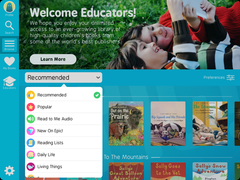
As they are contextual tools, it’s important to consider context when developing narrative and expository language with SGM® and Thememaker®, respectively. Picture books naturally make terrific contexts to work on narrative at a range of developmental stages and teach identification and use of expository text structures. This summer, while you are away from your school libraries, you can check out the gold mine of contexts that is the EPIC! Unlimited Books for Kids app (free for iPad). When you launch the app, sign up for an educator account (also free) and you will have access to an amazing library of picture and chapter books from leading publishers such as Harper Collins, National Geographic and MacMillan. As the app claims to be, “it’s like a Netflix for children’s books!”...
Put the Story on Stage with Puppet Pals!

There are a great many easy-to-use apps for iPad that fall into the category of digital storytelling. This may sound like a daunting concept, but digital storytelling is just using technological tools such as digital pictures, video, audio, animation, or drawing in order to convey a story or information. Apps that combine these tools use the intuitive interface of the iPad to bring together different kinds of content in an engaging process of creation — all with your fingertips. Even better, these apps provide a great context to utilize Mindwing Tools such as Braidy, the StoryBraid, Story Grammar Marker, ThemeMaker and their accompanying story or expository planning maps...
The Incredible 5-Point Scale and Narrative Elements

April is Autism Awareness Month, and I wanted to highlight one of my favorite tools that I employ with students with autism spectrum and related disorders: The Incredible 5-Point Scale by Kari Dunn Baron and Mitzi Curtis. The 5-Point Scale is a tool designed to help students understand the confusing, emotional and language-heavy range of human behaviors by boiling it all down to a scale of 1-5. The approach is very versatile and can be applied to many situations and target behaviors, such as emotional state, voice volume or scales to help students grade their responses to everyday occurrences such as a “Participation Scale” within the classroom...


MindWing Concepts and Instructional Technology
I have long had an interest in how technology can provide context within our interventions, much the same way a storybook can provide context. In this approach to intervention, MindWing's tools have served as essential structure to help my students break down language, (as used with a website that provides information, for example) or organize and produce language (when used in conjunction with a creative “Web 2.0” resource that allows students to save and publish work). To focus on this latter "bottom-up" strategy, I suggest you check out Kerpoof, one of my favorite resources for its versatility and ease of use.
Kerpoof* is a free, interactive website recently acquired by Disney and is basically an online version of Kidpix Studio. Kerpoof's interface allows you to choose a background, characters and other setting elements, and add word/thought balloons and caption boxes (sounding promising?). You can create, share, export or print the resulting pictures or multi-picture story sequences...


Tech Tuesday: Finding Story and Other Text Structure in “Minecraft” Education
We have previously discussed the potential of the incredibly popular game Minecraft for developing narrative language skills through the use of Story Grammar Marker®. At that time, I had described the game as potentially too complicated to use as an actual tool in activities, but I have since rethought that. The iPad version ($5.99) will allow you to create a simple “world” (use the Creative mode) and the building interface is easy to learn, operating much like LEGOs. As a result, spaces can be used to scaffold language for describing settings. Minecraft Education, on the other hand, offers a specialized, structured collection of Worlds you can use for both narrative and expository language. The software is available to anyone with a Microsoft 365 account and usable on a laptop, desktop, or again on the iPad...
Synergy Between MindWing and Social Thinking
I would first like to emphasize the concept of Friend Files, described in Michelle Garcia Winner’s Think Social: As Winner says, it is expected that we remember certain things about people we know by keeping an imaginary file in our brain (and first of all it is helpful to label our friend file with the person’s name)! Drawing from that file allows us to: a) use the oft-positively-received behavior of showing interest and b) have a wealth of conversation starters. Maryellen writes in It’s All About the Story about a kiddo we probably all know: “To make conversation, it would be essential for John to know that the classmate liked baseball, but more specifically liked the Red Sox, and disliked the Yankees.”...


Tool Tuesday: 3 Prompts for ChatGPT to Facilitate Narrative Teaching
Artificial Intelligence (AI) is, of course, one of the hottest topics in technology these days. Its recently emerging abilities are producing a mix of excitement and anxiety for the ways that it is disrupting education and other fields, but like many technology developments, it should be viewed as a tool. You may not know where to start, but one path is using ChatGPT’s free tools along with prompts that can help you plan narrative language interventions. ChatGPT is a chatbot from OpenAI (owned by Microsoft) using generative AI, which is a form of artificial intelligence that can create text, images, video and other media...


Gingerbread Characters and Settings

Using the holidays as a context for language interventions can be tough, as it’s important to be inclusive of all cultures and celebrations. From a technology perspective, there just aren’t many great interactive resources about the Festival of Lights (anyone want to make some)? Gingerbread, however, while associated loosely with Christmas, is probably fair game in the public school setting!
Now, while websites with excessive, distracting ads are often something I rule out as a potential therapy resource, sometimes sites that are actually a giant, yet somehow unobtrusive ad can be great...


Two of My Favorite -ERs: ThemeMakER and GlogstER!
ThemeMaker, Mindwing’s expository companion to Story Grammar Marker, helps children break down and produce the more challenging expository text that becomes central to learning as they advance through the grades! I have found that children are more open to working with expository text once they learn that the familiar SGM icons can help them along the way! While each ThemeMaker Expository Text Map (e.g. List, Sequence, Description, Compare-Contrast) is helpful on its own, kids need to be moved toward understanding that ALL of these structures are contained in curriculum discourse and text!
That can seem like an overwhelming task, but it becomes manageable and fun using a recently developed and FREE online tool, GlogsterEDU, a site that tells all students to “poster yourself!” What is a poster, really, but a display of information that utilizes these key expository structures? Using GlogsterEDU, you can choose and research any topic with your students using ThemeMaker maps and icons, then create a “Glog” with pictures, images and graphics, text (structures!) links, and even recorded audio and video if you wish!...


Tech Tuesday/Summer Study Series: Combining Narratives with Play Yields Social Competencies!
June has at this point busted out all over! I know I am wrapping up my school year work while many of you may have been lounging for a few weeks, I hope. For this month’s entry in our Summer Study Series we are diving into the strong connection between narrative language and social learning. But speaking of Summer Studies related to narrative and social development, don’t miss MindWing’s Summer Course: Social Communication with SGM®: Social Emotional Learning, Language Processing, & Pragmatics—July 25 & 26, 2023! While from a few years back, this month’s article presents terrific and easy to implement ideas for the PK-primary school level. Let’s delve into “Using a narrative- and play-based activity to promote low-income preschoolers’ oral language, emergent literacy, and social competence” from the Early Childhood Research Quarterly (Nicolopoulou, Cortina Ilgaz, Brockmeyer Cates & de Sá, 2015)...


Tech Tuesday: Create Images with Story Elements using AI!
You have probably heard chatter about the potential and possible pitfalls of AI in educational contexts. This month- a simple way to harness the possibilities of AI image generation. Generative AI has been around for many years but has only been recently been made widely available to the public via a variety of webtools. This kind of artificial intelligence is called “generative” for its ability to use growing neural networks to create content, such as novel text, imagery or even music and video. ChatGPT is a recent tool which responds to prompts to create text, and I recently blogged about its usefulness in generating problem solving scenarios–also useful for targeting story elements. Along with ChatGPT, Microsoft’s OpenAI offers DALL-E, an image generator which is able to create pictures from “natural language,” as opposed to code. This is most easily accessed through the Bing Image Creator, a simple tool that develops images from scratch (not search)!...


Tech Tuesday: Jeopardelaboration!
 We have previously discussed in this blog the importance of the “GIVE A STORY TO GET A STORY” technique. Described by Hadley (1998) in her wonderful article on naturalistic language sampling, and linked to other resources, conversational mapping involves providing a story about your own life which can help elicit the same from your students. This technique provides a great model and also a pragmatic context for narrative intervention, no matter the “size” of your story. Recently, I had a rather big story to share with my students. After many years of trying, I made it through the audition process to compete on Jeopardy!...


Tool Tuesday: Seasonal “Stories”
Maryellen, Sheila, and I have had many conversations about how almost any context can be put into story form with Story Grammar Marker®! On the flip side, we know that it takes practice and linguistic flexibility to consider what “fits” as each story element, though I often also say that you can’t really do it wrong. There are many ways to tell a story. As the holiday season is upon us, I was thinking about the variety of cultural and religious (or both) observations that take place around this time, and how they tie into the observation of the winter solstice...


Tool Tuesday: Make a Photo into a Story!
McCabe and Rollins (1994) perfectly describe the value of model stories in their article on eliciting narratives: “In spontaneous interactions, you have to tell a story to get a story. Almost everyone has experienced awkward silences in social situations. No one can think of a thing to say. However, the minute one person launches into a tale about locking keys in his or her car or leaving lights on in a parking lot, virtually all others in the group share a similar incident that happened to them.”


Tool Tuesday: Google’s Arts and Culture Games
If Google’s Arts and Culture website can be taken as a model, it seems like artificial intelligence (AI) is rejuvenating the interactive website. For some years there was a wealth of interactive websites that allowed for making choices and creating stories, but these seem to have faded with the retirement of technologies like Flash, and also by the redirection of priorities through the pandemic years. Check out Google’s growing library of games for some hope for this form of instructional technology. Sparky is a great one to start with. In this activity, you create inventions by combining everyday objects. Begin by choosing a purpose for the invention—food, music or travel—then allow your students to use their imaginations and collaborate…


Tool Tuesday: Create Stories in Slides
I have often thought that although assessment materials—including SLAM (School Aged Language Assessment) cards offered by the Leaders Project—offer great baseline or progress monitoring tools, it would be great to have something similar for treatment. I have been continually impressed by the materials the graduate students I work with at Boston University create with Slides Go, so I wanted to tell you about this great resource! Slides Go is designed to provide Google Slides or PowerPoint templates, generally to adults making presentations. Sounds boring, right? HOWEVER, the templates include adorable cartoon-like sets that are very appealing to young students...


Tool Tuesday: The story of creating an AI-generated story!
Continuing on an artificial intelligence (AI) track this month, I was curious recently whether any tools have surfaced that specifically relate to creating stories. Creating a story about a timely, curriculum-related, or personally relevant topic is, of course, an activity that can create a great context for analyzing the result with Story Grammar Marker® and applying its icons to language mapping. AI tools are also fun to play around WITH students and can be used metalinguistically with prompts to the tool to use specific story elements...


Tool Tuesday: Maca and Roni Video Series Provides Tons of Context for Narrative Teaching
Looking for narrative structure in varied places will yield you many TOOLs! This includes sources such as games, current events, interactive websites, and of course, videos. In this post I want to expand upon the great work of Dr. Anna Vagin, who several years ago co-presented a webinar with Maryellen Moreau on the power of using animations for social and language learning (still available for free here). A quote from this webinar resonates strongly: Jerome Bruner (1986, 1996) referred to narrative thinking as a capacity to “read other minds”; “to make accurate inferences about the motives and intentions of others based on their observable behavior and the social situations in which they act. Narrative thinking is the very process we use to understand the social life around us,” take perspective and to construct situation models...


Tech Tuesday: Make Simple Parallel Stories with Jamboard!
 from Google is a tool that was created “just in time” (in tech-talk) for the pandemic. Of course, these events thrust us into new ways of working with our students from a distance. Jamboard’s simple whiteboard features simplified remote, tech-based clinical interactions, such as solidifying ideas with pictures and making thinking visible with sticky notes. Jamboard was released in 2017 as a business-brainstorming tool and had started to make its way into educational circles more widely when the unthinkable happened: schools and clinical settings needed to shut down. Throughout the pandemic, it was an invaluable tool, one which I wrote about here in conjunction with the use of MindWing’s Digital Icons. But like some emergency practices, it has continued to be extremely useful. See the linked post above for some nitty-gritty how-tos on using Jamboard. In this post we are going to focus on a specific application of creating parallel stories. The practice of using picture books in speech-language and literacy interventions is well established, as it can provide a context for teaching narrative structure (with Story Grammar Marker® of course) and microstructure such as syntax and vocabulary targets...


Tech Tuesday/Summer Study Series: Language Disorder and Emotional Regulation
It’s hard to believe that this is the last entry in our 2022 Summer Study Series as we are entering the final act of the summer. For that matter, consider all we do to regulate ourselves around these transitions (Lifehacker article): being able to label how it makes us feel, and applying thinking tools and activities to help ourselves adjust. Like all humans, we have varying degrees of success in navigating these emotional waters, which is the subject of this month’s post. The article “A Multimodal Comparison of Emotion Categorization Abilities in Children With Developmental Language Disorder” (Bahn, Vesker, Schwarzer & Kauschke, 2021)...


Tech Tuesday: Mix it Up!
 Though it should be a 12-month goal, this April—during Autism Acceptance Month—it’s important for us to be making strides toward considering what and how our students want to learn. Doing so gears us toward aligning with the client values aspect of Evidence-Based Practice and with implementing therapies that are responsive to neurodiversity. In this way, it’s helpful to consider the flexible aspects of tools such as Story Grammar Marker®, so that we can show and affirm with clients that there are many ways to express ourselves. I recently was completing a lesson and activity with a group of middle school students about a topic I consider to be critically important right now: RESILIENCE. Resilience is in many ways wrapped up in narrative language because of the role of how we relate our own experiences (stories) to ourselves...


Tech Tuesday: Finding the “Story” in Cooperative Games
In a little deviation from what might be considered “high” tech this month, I’ve recently been thinking a lot about the role of play in language  interventions. Play is closely connected to narrative, as we often use story components to structure our play. I recently presented at ASHA Convention providing a “Play on Words” (click here for the handouts), and discussed a variety of playful contexts that can be used to target language (including narrative) and social learning. In particular, cooperative games with a shared goal and no real “winner”— except the group—can be used to target many communication skills...


Tech Tuesday: More Spooky Stories!
 Halloween is always a holiday that can be leveraged for engagement (and stories!) with our students. We hope you will add these three resources to your list to “harvest” annually! Through the pandemic telepractice-fest and beyond, I have enjoyed capitalizing on the trend of escape rooms for intervention activities. They make a great collaborative activity and encourage students to “think with their eyes” (ala Social Thinking®) as they look for clues. Escape “rooms” from HoodaMath contain a brief “story” introduction--why you are trapped there, a Kick-Off, and what you need to plan to do to get out! And what is an escape activity but the exploration of a Setting? Use MindWing’s Setting Map to teach the language underpinnings of describing a setting. In particular, escape games are great for helping students to label the parts of a larger setting...


Tech Tuesday: Flexible Icons!
 MindWing’s Digital Icons were first created in the wake of the Covid-19 emergency in order to offer access to tech-based material creation while many professionals were struggling to implement teletherapy as best we could. As you may know, the icon sets offer easy copying and pasting of the icons (including Story Grammar Marker®, Braidy the StoryBraid® and Thememaker®) into various “blank slate” resources. This allows us to use word processors (Google Docs/MS Word), presentation tools (Google Slides/PowerPoint) or whiteboard software (Smart Notebook) as powerful narrative and expository teaching tools.


Tech Tuesday: Using and Annotating MindWing’s Virtual Posters
 In this post, we’ll describe how to use MindWing’s NEW Virtual Posters product in distance learning sessions, and also how to annotate them for narrative scaffolding with students. The Virtual Posters provide a range of visuals that are easily added to Zoom or Microsoft Teams sessions (currently not Google Meet) and provide a reference for narrative/expository text and social pragmatics instruction. First of all, it is important to know how to add these visuals, which are JPEG image files, to platforms such as Zoom, in order to use them as virtual backgrounds during a session...


Tech Tuesday: Telling Tales at Varying Developmental Levels
 The practice of providing model narratives in order to scaffold personal narratives from students is one that is supported in our literature. Pamela Hadley (1998) describes conversational mapping, or “give a story to get a story,” as critical in language sampling, and these principles can be extended to intervention activities. Westby and Culatta (2016) suggest similar procedures: “Clinicians can model the telling of event narratives and ask children to relate their own experience about a similar event. One clinician told of a time when she did not close the door on her hamster's cage, and the hamster escaped and was never found. The telling of that experience elicited a child's story about a time when he had pet crickets in a cricket cage and the family cat got into the cage and ate the crickets.” We should remember that not every model needs to be a complete episode, though I realized after a recent trip to Utah’s National Parks that I had one ready-to-go. Additionally, this model also demonstrates the synchrony between Story Grammar Marker® and Zones of Regulation®.


Tech Tuesday/Summer Study Series: Fostering Rhetorical Competence in Expository Text Interventions
 This summer we are bringing back the “Summer Study Series!” This series of posts is providing summaries of recent research related to narrative and expository language and Story Grammar Marker®/ThemeMaker® in order to expand your toolkit and library of evidence-based practice information for September. So, to our study for the month! We invite you to Spain, this time, for some work clearly relevant in English as well, from García, Sánchez, Cain & Montoya (2019), published in the journal Learning and Individual Differences. Their “Cross-sectional study of the contribution of rhetorical competence to children's expository texts comprehension between third- and sixth-grade” looked at rhetorical competence (RC), or knowledge and understanding of certain text cues within expository texts and its interaction with reading comprehension...


Tech Tuesday: Five FREE Current Sources of Expository Text
 When working with students on comprehending expository text, we can often capitalize on their interests for motivation. However, expository sources lack the draw of narrative, so it can be helpful to use technology to add engagement. In this post we’ll update you on five places you can find free expository text material for mapping with ThemeMaker® maps for List, Sequence, Description, Compare-Contrast, Problem-Solution or other associated graphic organizers...


Tech Tuesday: The Story of an Argument and Perspective
 No need to break out the popcorn, we’re not talking about the argumentative kind of argument! I have been working with a high school student over the course of the past year who has particular difficulties in comprehension and discourse formulation. His school has quite a challenging program, and each session brings to the table a contextual assignment in which organizational strategies can be identified for him to apply. Fortunately, he is very engaged in the process and can always identify a task for which he needs help. This past week, he was working on constructing an outline for a debate argument, and I immediately thought of the Persuade organizer from MindWing’s Thememaker® tool for understanding and organizing expository language...


Tech Tuesday: ASHA Beantown Wrap-up, Part 2: Telepractice
 First of all, you may wonder, what is telepractice? And, if you are not so interested in the answer, this post will still have some tech-related ideas for you to apply in your “in-person” therapies. To quote ASHA’s resource page on telepractice: “Telepractice is the application of telecommunications technology to the delivery of speech language pathology and audiology professional services at a distance by linking clinician to client or clinician to clinician for assessment, intervention, and/or consultation.” All of the exact same principles and practices of intervention via in-person therapies apply to telepractice, just the method of delivery is different. Telepractice is often conducted via a secure web portal such as Zoom, allowing clinicians and clients on the other side to communicate via microphone and webcam, and using visual and interactive tools to conduct activities (e.g., screensharing, giving the client control of the screen for clicking and dragging)...


Tech Tuesday: Back to School Part 1: 5 Great Resources for Deconstructing Narratives and Information
 Technology resources provide context through visuals and text, and these can be an extremely engaging way to introduce narrative and expository language structures to build comprehension. We can, along with our students, analyze the content of apps and websites in a process of co-engagement: What do you see? What do I see? MindWing’s narrative language icons and maps (Story Grammar Marker®) and corresponding expository language structures (ThemeMaker®) will lend a strategic and specific focus toward building the comprehension of discourse as you explore these resources! EPIC! Books for Kids is a clearinghouse of digital texts that are free for educators (sign up for the Educator Account). This resource is accessible on the web, iPad or even Apple TV, and contains 25,000 books, providing an experience similar to walking through a Scholastic Book Fair. The books are searchable by topic...


Tech Tuesday: Interpreting Research on Narratives and Autism
 In this Autism Awareness and Acceptance Month, we turn our attention more specifically on our students and clients with unique social learning and language characteristics. A recent (2017) study by Westerveld and Roberts, The Oral Narrative Comprehension and Production Abilities of Verbal Preschoolers on the Autism Spectrum, has a number of implications that I would like to interpret in the context of tools available for narrative intervention. The study involved assessment of preschoolers’ narratives (notably an uninvestigated area for preschool students with autism, according to the article) via presentation of a fictional narrative and administration of comprehension questions and a retelling task. A large grouping within the sample did not produce a retelling that could be analyzed, but the 19 that did were assessed for length, semantic diversity, grammatical complexity and accuracy, intelligibility, inclusion of critical events, and narrative stage. The article notes that most of the research on spontaneous language of preschoolers with autism has focused on free play, rather than the ability to pull language together into narratives...


Tech Tuesday: La La Land, Part 1

At November’s ASHA convention in Los Angeles, I had the opportunity to present several sessions that integrated Story Grammar Marker® and Thememaker® with technology resources for narrative development, and wanted to share some of those ideas across a couple of posts (too many for just one)! When preparing to present in the “city of stars,” I thought about incorporating the theme of storytelling and movie-making, which was a great fit. I considered Hollywood’s penchant for sequels, and how that sometimes ultimately goes quite wrong in execution. However, when it comes to picture books, sequels and series are often a hit within language interventions...


Tech Tuesday: Beach Stories!

Kids love talking about the beach, and so many Kick-Offs can happen in a beach setting! While not everyone is close to a coastal beach, trips to beaches or pools with family are a hallmark of summer, and can be a great context for narrative work during summer sessions or upon return in the fall. Here are a number of technology resources that can serve as contexts and scaffolding for this summer topic. The Toca Life apps, featured here on the MindWing Blog previously, are excellent contexts for any level of narrative development. Toca Life: Vacation features a number of Settings from which you can develop descriptive elaboration: a beach (naturally), airport, and hotel. Toca Life: Town contains several homes...


Tech Tuesday: Recommending “YouCue Feelings” by Dr. Anna Vagin
 Story Grammar Marker® intersects in powerful ways with social learning tools and methodologies such as Social Thinking®, The Incredible Five Point Scale, and The Zones of Regulation®. Many of these approaches emphasize situational awareness and understanding of social contexts. Also emphasized in these approaches is the process of “getting” others’ perspectives and the “Landscape of Consciousness” illuminated by discussing Reactions (using an SGM® Reaction Sequence map) and advancing to target description of Feelings and Plans. Dr. Anna Vagin has carved a niche for exploring the utility of videos in addressing these aspects of narrative language and social cognition, detailed in her books Movie Time Social Learning and YouCue Feelings, which will be discussed in this post...


Tech Tuesday: Tech Tie-Ins to Autism Awareness Month
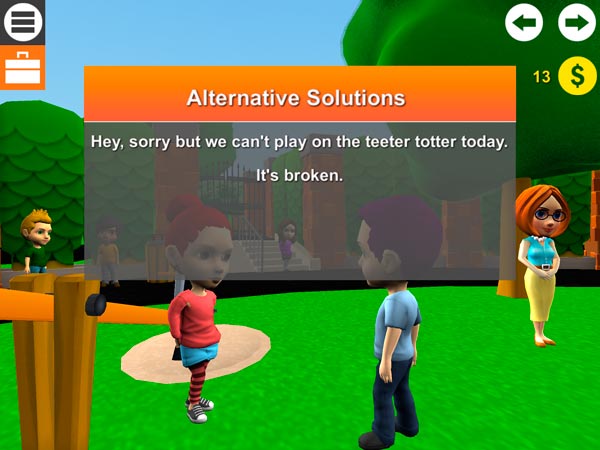
For this month’s Technology Tuesday, I wanted to spin off of the previous post and mention new resources relating to the themes of a few of these posts from the MindWing archives. So here is some commentary and additional tools relating to four of our back catalog of posts relating to language learning in the population of students with autism spectrum and related disorders. Aligning SGM® with The Zones of Regulation, and Tech-Tie-Ins! This post described the key connections between Story Grammar Marker® and Leah Kuypers’ wonderful and extremely useful Zones of Regulation curriculum. In the post, resources such as Pic Collage were mentioned for making visuals elaborating on emotional vocabulary associate with each Zone, and YouTube Kids for locating video scenes to assist students in identifying Zones and “Triggers” (essentially Kick-Offs) in others...
Using Kerpoof for Digital Storytelling and Narrative Development Part 2
Over the years I have come to believe that Story Grammar Marker has taught me as much about narrative development as it has taught my students about telling stories! Initially, I used to use the full SGM and teach Complete Episodes, regardless of my students' level of development. Although they gained a good sense of the icons and could identify story elements, the ties between elements were missing--what to do about my third graders who still peppered their stories with "and then" after "and then?" Using the “A Day in the Park” booklet with students really helped me understand my students' narrative levels and the cohesive ties that mark each stage. From there, my use of the SGM became much more thoughtful, differentiated and holistic-- addressing sentence structure as well as overall story structure.
Back to those 3rd graders- although we had done “A Day in the Park” in Grade 2, they definitely needed a review, specifically one that would boost them from an Action Sequence to a more complex story that included more mature cohesive ties: a Reaction Sequence. Their teacher welcomed me into the classroom for a group project...


Setting Can be the Key to a Story
My previous post discussed the narrative element of setting and the tendency of students on the autism spectrum (or with other language disorders) to leave out details about setting, causing listener confusion. One way to explore the importance of setting is to plan interventions using books with an integral setting- where the setting is key to the motivations of the characters and understanding of the plot.
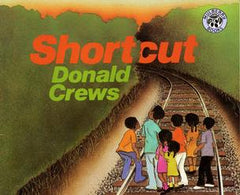
One of my favorites in this vein is Donald Crews’ Shortcut, the story of a group of cousins who find themselves in unexpected danger after taking a shortcut home. Not only does the book serve as an excellent example of building suspense around a small moment in a personal narrative (great for students working on memoir), it also lends itself to being mapped both on a Setting Map and a literal, visual map to develop storytelling skills...


Story Grammar and the Classroom Curriculum: The Five Senses
Over the years I have developed a special interest in collecting and using picture books that are tangential to the classroom curriculum. It’s wonderful to find books that contain touches of our content areas but aren’t “in your face” about it! These books can engage students in a story (and thus help them develop narrative language) while also providing a context to access abstract curriculum areas.
Although many schools cover this topic at different times of year, Spring is a great time for a science unit on the five senses. For younger students, this is a basic overview on how we experience the world though hearing, sight, smell, taste and touch. For older students, these simpler concepts can serve as an entry point to the more difficult intricacies of how the sensory system works. Additionally, May is Better Hearing and Speech Month in the USA and May Month in Canada, so what better time to talk about the sense of hearing, and maybe sync with some lessons about hearing and speech?...
Simple Comics for More Advanced Language
At the elementary school level, we all can attest to seeing students who, narratively, get stuck at what we might call the “andthenandthenandthen” stage. The official name for this stage is the Action Sequence, and it is comprised of Characters, Settings, and a series of Actions with little variation in conjunction use. These students benefit from structures and contexts to move them into using to more complex story elements and cohesive ties such as when, because, and so. Mindwing’s narrative maps, particularly the Reactive Sequence and Abbreviated Episode Maps can provide that structure: (*Maps can be found in the Story Grammar Marker® Teachers’ Manual and the Talk to Write, Write to Learn™ Teachers’ Manual )...
A Gift to a Character!

‘Tis the season! No matter what one’s religious beliefs are, the holiday season involves giving, and this is a context that is ripe for critical thinking, description, perspective-taking, and social scripts. It can be quite difficult to engineer learning situations in which children are giving each other actual gifts, what with the need for stores, money, and the fine-motor aspects of wrapping. However, technology can cut through some of that sticky tape for us and provide us with a virtual-gift-giving activity!
I first learned of the Gift Wrap App (FREE for iPad)...


Exploring Action Sequences with Apps and the Common Core Standards
 The narrative skill of describing and sequencing actions that can occur within a particular place is so relevant to the classroom curriculum, most recently redefined with the arrival of the Common Core State Standards. The classroom itself is a place where children learn, play, read, write, draw, listen, laugh, and sometimes argue, not necessarily in that order! Nearly every academic topic could be framed as an action sequence, while many children requiring narrative language intervention can get stuck at the previous level of naming, the descriptive sequence. We can help scaffold them to the next level using Story Grammar Marker® and strategies from MindWing’s recent book, The “Core” of the Core: Using Story Grammar Marker® and Other MindWing Concepts Tools To Support Students in Meeting Grade-Level Common Core State Standards...
“The Incredible Flexible You” and Braidy Make a Great Pair!
April is Autism Awareness Month, and here on the blog we wanted to showcase a connection between Mindwing’s tools and interventions that target social learning for children with autism!
Over the past year since its release, I have found The Incredible Flexible You™ Curriculum Set (Volume 1) by Ryan Hendrix, Kari Zweber Palmer, Nancy Tarshis and Michelle Garcia Winner and published via Social Thinking® to be an invaluable teaching tool! Targeted to early learners—preschool through 2nd grade, but adaptable to older students requiring basic social learning lessons—the curriculum set aims to develop key social cognitive concepts through stories and play. The five storybooks that come with Volume 1 set the context for many lessons and play activities as the main characters, Evan, Ellie, Jessie and Molly, learn and demonstrate the core concepts in the set...
Narrative is “Having a Moment” in Research Circles
Narrative seems to be “having a moment” in research circles, with a number of recent articles being published related to the why and how of developing storytelling skills. One of the most exciting pieces is “Classroom-Based Narrative and Vocabulary Instruction: Results of an Early-Stage, Nonrandomized Comparison Study,” (Gillam, Olszewski, Fargo & Gillam, 2014) detailing a study primarily conducted by Utah State University and published in Language, Speech and Hearing Services in Schools (and available to ASHA members in full text here).
This study com-pared the results of narrative and vocabulary instruction via a traditional versus an experimental approach in two first grade classrooms...

Tool Tuesday: Tuning in to Whole-Class Instruction
The article discussed this month interested me in particular because, although in private practice and university settings currently, I have a long history as a school-based SLP. As my caseload grew, I found huge value in forging partnerships with teachers to deliver a portion of services in their classrooms with co-led lessons, or simply taking the lead for 30 minutes a week. The teachers appreciated my efforts to tie in with curriculum topics and also providing them with tangible strategies they could carry over with students to support their language development.
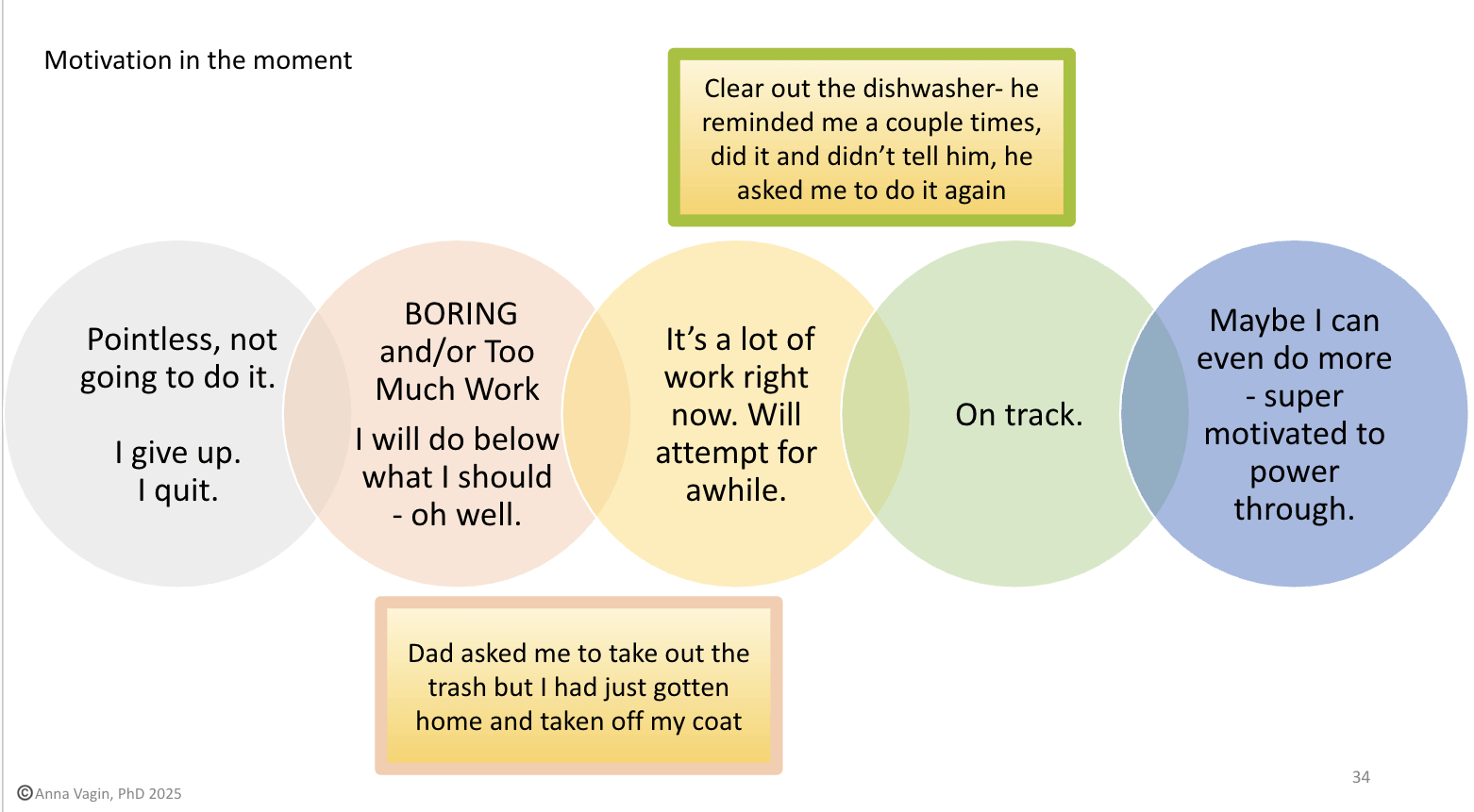

Tool Tuesday: A Fresh Take on Social Scales
SLP and social educator Anna Vagin has provided a wealth of resources that overlap wonderfully with MindWing’s methodologies in narrative language development. Through her website workshops, and terrific FREE mailing list, she shares connections to fostering conversational language, using engaging contexts such as games and animations to build social cognition, and recently, a new perspective on using visually supportive cognitive/emotional scales. Scales are a tried-and-tested tool for expanding thinking, linked to counseling approaches such as Cognitive-Behavioral Therapy (CBT), Acceptance and Commitment Therapy (ACT), and Motivational Interviewing (MI)...