The Story Grammar Marker® Approach
For Language Development, Inference Generation, and Discourse-Level Comprehension and Expression


Join thousands of educators, parents, and other professionals in implementing the Story Grammar Marker® Approach with our virtual courses, onsite workshops, coaching, and hands-on instructional materials!


Tool Tuesday: Story Grammar Marker can help your brain!
This month’s post is a support for you and your students’ brains as we get deeper into this new school year. I have tried to make a habit of bibliotherapy, the practice of consuming books— literature or the more “self-help” type—that connects you to emotional regulation and growth. This month, I am reading Hardwiring Happiness: The New Brain Science of Contentment, Calm, and Confidence by Dr. Rick Hanson and I see such a connection to narrative language and Story Grammar Marker!...

Tool Tuesday: The Gift of Words!
As an SLP, I have always loved working with vocabulary development. Unlocking new words for students is so demonstrably gratifying. We can imagine that they will encounter new words later in their listening, reading, or general daily experiences with confidence, and hopefully find them to be tools to express themselves and even solve problems. Vocabulary is also an easy channel to target in the course of narrative intervention, context being a key to word learning. Targeted vocabulary can be part of the microstructure elements we emphasize...


Tool Tuesday: Tuning in to Whole-Class Instruction
The article discussed this month interested me in particular because, although in private practice and university settings currently, I have a long history as a school-based SLP. As my caseload grew, I found huge value in forging partnerships with teachers to deliver a portion of services in their classrooms with co-led lessons, or simply taking the lead for 30 minutes a week. The teachers appreciated my efforts to tie in with curriculum topics and also providing them with tangible strategies they could carry over with students to support their language development.

Tool Tuesday: THINKING about our Summer Study Series!
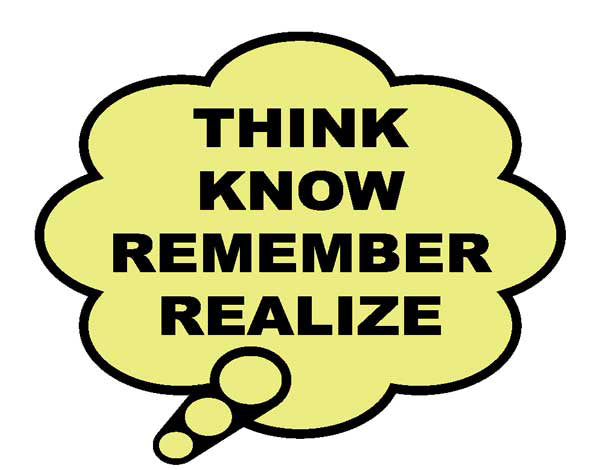
In my work with students, I have become particularly interested in incorporating that beautiful thought bubble icon on Story Grammar Marker®. I find it an elegant icon, serving to scaffold both complex language (I remembered that it was the last week of school contains an embedded clause) and perspective taking, a skill endorsed by advocates of neurodiversity affirming approaches. For this month’s post, I traced a source through Anna Vagin’s work, as she has also provided many resources on working with mental state verbs (MSVs)...


Learn why Maryellen Rooney Moreau, M.Ed. CCC-SLP developed the Story Grammar Marker® Approach to language & literacy!

Improve Language, Literacy, Higher Order Language & Cognitive Skills
- Oral Language Development
- Language Comprehension
- Awareness of Text Structure
- Reading Comprehension
- Sentences, Questions & Cohesive Ties
- Vocabulary and Background Knowledge
- Critical Thinking
- Inference Generation
- Narrative & Informational Writing
- Verbal Reasoning
- Social Emotional Learning
- Theory of Mind
- Perspective-Taking
- Situation Model & Mental Models
Develop Foundational Language & Cognitive Skills and Social, Emotional, & Mental Well-Being
- Co- and Self-Regulation
- Fostering Resilience
- Working Memory
- Empathy Building
- Sequencing Routines
- Problem Solving
- Emotional Intelligence
- Organizing Thoughts
- Mediating Meltdowns
- Facilitating Conversations
- Resolving Conflicts
- Executive Functioning
- Mediating Sibling Rivalry
- Goal-Setting
- Thinking and Talking About Feelings, Plans, Thoughts, Outcomes


The Story Grammar Marker® Approach improves the language and literacy skills of children by empowering Educators, Parents, Specialists, SLPs, Psychologists to…

Foster High Student Engagement with our easy-to-use icon-based system and hands-on, intuitive tools.

Encourage Interdisciplinary Collaboration among students, classroom teachers, SLPs, specialists, parents, reading teachers, literacy coaches, content area teachers, psychologists and more!

Cultivate a Common Language in the Classroom, the Therapy Room, the Playground – and HOME!

Facilitate Classroom Management via organizing expectations, sequencing routines, solving problems and resolving interpersonal conflicts, and assisting with self-regulation.

Save Time: the SGM® is LOW PREP — once you know the system, you can grab the tools and maps in the moment, in any situation, during any lesson!

Make quality instructional decisions based upon scientific research, models and frameworks, and delivering explicit, systematic, and differentiated instruction.

Nurture a Growth Mindset and a “CAN DO!” attitude. Discover students’ Superpowers!

Promote Equity and Inclusivity by providing support for ALL LEARNERS regardless of age, ability or background, and giving every student a VOICE! Give them a tool that will help them to TELL THEIR STORY.
Discourse is a Missing Link In Literacy Instruction!
The Story Grammar Marker® Approach is rooted in the DISCOURSE Level of Language Development.
Click below to learn more about the building blocks of language and literacy.


In 1991, based on years of research and experience, Maryellen Rooney Moreau, M.Ed., CCC-SLP, pioneered the idea of designing meaningful symbols “icons” to represent the components of story grammar that make up the episode of a story.

She created a powerful tool that children can hold in their hands to tell a story. When it worked so well for one 3rd grader, it was field-tested by speech pathologists & reading specialists in a private school on a college campus. Word of its success with a neurodivergent population brought the Story Grammar Marker® Approach to the attention of public school programs, and has become widely used in general education classrooms as well! It is now in use in 36 countries across the globe.

In 2014, Maryellen was recognized for her professional work as creator of the Story Grammar Marker® Approach and related methodology, and as the founder of MindWing Concepts, Inc., when she became the 2014 recipient of the Alice H. Garside Lifetime Achievement Award from the International Dyslexia Association, Massachusetts Branch.






People learn best from others, so we thought you’d like to hear from others who have used and support the SGM® Approach to teach reading comprehension and critical thinking.
“Scientists have long known that human beings are storytelling creatures. For centuries, we have told stories to transmit information, share histories, and teach important lessons. While stories often have a profound effect on us due to emotional content, recent research also shows that our brains are actually hard-wired to seek out a coherent narrative structure in the stories we hear and tell. This structure helps us absorb the information in a story, and connect it with our own experiences in the world.” Scientific Learning. (2012, June 14). Using Stories to Teach: How Narrative Structure Helps Students Learn [Blog post]. Retrieved from http://34.211.105.222/blog/using-stories-teach-how-narrative-structure-helps-students-learn
12 Lessons to Begin Using the Story Grammar Marker®